How Brand Consistency Becomes a Product Architecture Decision Not a Style Guide Problem
Shared, machine-readable brand context keeps every agent on brand.
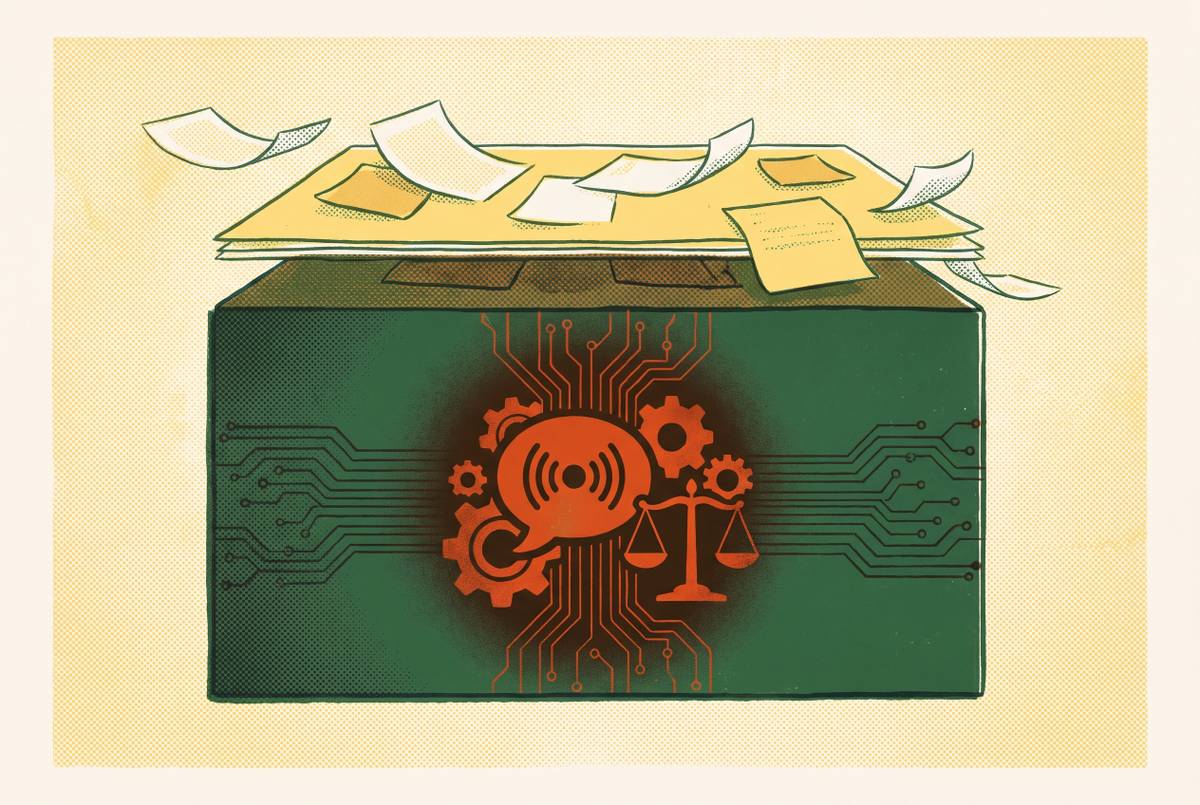
The brand layer for agents is a shared, machine-readable source of brand identity that every connected agent and product draws from, kept current through versioned updates. It uses structured rules, live access, and checks before work is published so people do not have to keep prompting agents by hand. Making AI agents stay on brand is therefore a product architecture decision about how context reaches production.
Why AI agents make brand consistency a systems problem, not a communication problem
Most teams still keep brand authority in a PDF, a deck, or a Notion page, while production moves across tools that do not share that context. Briefs live in one document, visuals in a design app, drafts in another tool, and scheduling elsewhere. Each handoff creates another opportunity for drift. A document may explain the brand clearly to a person without providing the structured data, queryable access, or machine-readable rules that an agent workflow requires.
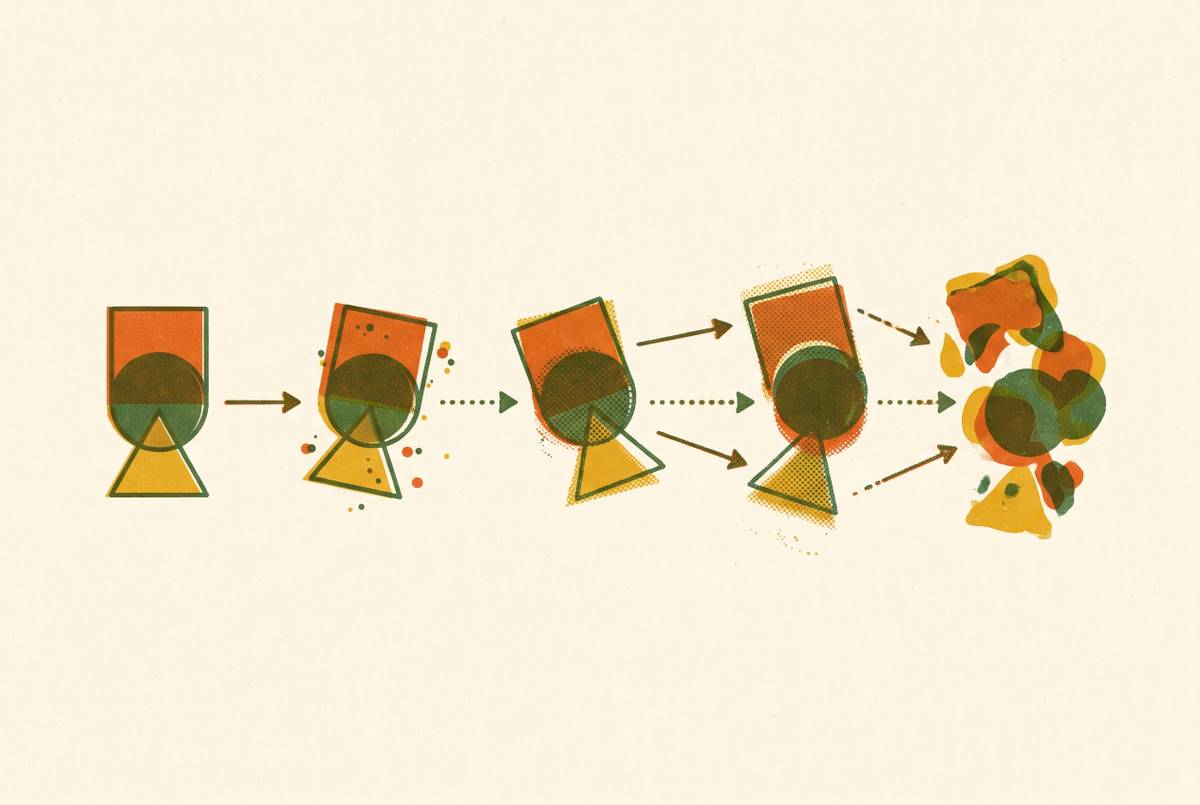
Agents can produce off-brand copy, images, and video faster than people can inspect them, so adding output widens the enforcement gap. Better explanations cannot close that gap by themselves. Typeface’s brand management guide identifies the underlying failure as generic AI content that “could belong to any brand” because the tools lack brand context.
Pasting guidelines into every prompt addresses one generation task, but it does not establish shared authority. Prompt-level rules encounter context-window limits, do not persist reliably across sessions, and cannot be updated centrally when every person maintains a different copy. The inconsistency is built into the workflow. Once multiple agents produce work at volume, brand compliance depends on what each system can access and apply, rather than on how well someone explained the guidelines at the start.
How should multiple AI agents access the same brand identity and guidelines?
For agents to share reliable access, brand identity needs three layers, each of which fills a gap in the one before it. The first layer consists of design tokens, which express colors, spacing, and typography as named variables. Tokens make visual rules addressable by software. However, a token called blue-500 tells an agent which value exists without explaining when that value belongs in a design.
The second layer uses semantic naming to give an agent the understanding of a value’s role it needs to use that value in a design. Otherwise, it must guess or fall back on patterns from its training data. Neither is a dependable substitute for the brand.
The third layer is a compact brand document, sometimes called a brand.md, covering strategy, voice, visual identity fundamentals, and specific dos and don’ts. This supplies the broader context that visual variables and their names cannot express. Together, they make brand identity usable by both people and machines without expecting a palette to explain positioning or a voice paragraph to specify typography.
Agentmelt’s design agent guide describes token-based styling where changing a token automatically changes the assets made after that. That dependency is the operational advantage over static templates. The same structured approach supports templates versioned like code, rollback to earlier versions, and separate token sets for sub-brands or campaigns. Brand identity becomes a maintained system of rules rather than a collection of examples that each producer must interpret independently.
What happens when brand structure meets an AI agent in production
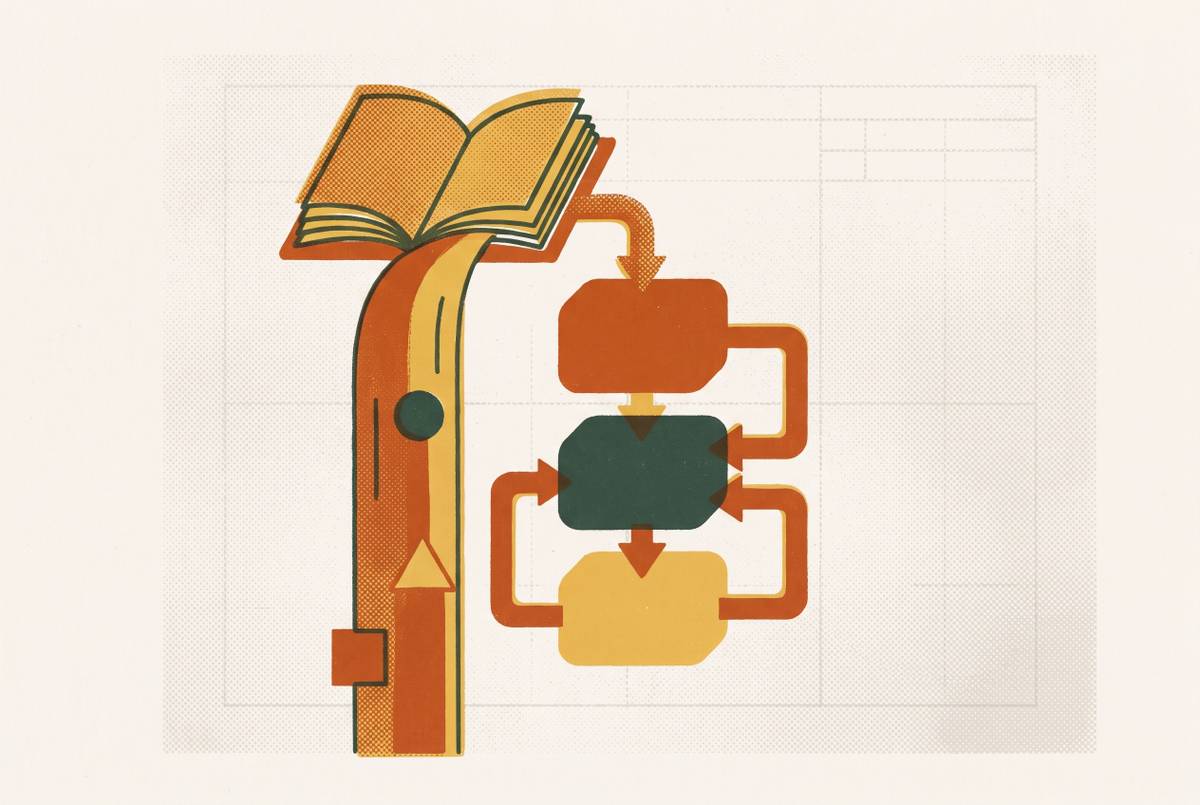
Agentmelt describes a production flow that starts with a brief, makes assets for each channel, and then runs automatic brand checks. People review the work after those checks, while variations for A/B testing stay within the guidelines. The checks can cover approved hex values, font family and weight, logo clear space, approved lockups, grid alignment, photography tone, illustration style, CTA phrasing, and terminology.
A template can constrain layout without evaluating whether a selected image fits the brand’s photography style. Google’s Gemini pipeline illustrates the difference through a self-healing loop. It analyzes generated output against concrete rules such as hex codes and logo clear space, as well as subjective elements such as overall tone. When it identifies a violation, such as the wrong green shade, it refines the generation prompt and repeats the cycle until the asset meets brand standards.
A Brand Guardian Agent pattern separates that evaluation role from creation. Its sole purpose is to assess drafts against stylistic and compliance guidelines and return unsuitable work for revision before a person sees it. An Adaptation Agent can then resize, reformat, and rewrite a campaign’s narrative and visual set for different platforms while applying platform-specific practices and preserving the core identity.
Typeface describes how a Fortune 100 insurance provider used a trained Brand Kit to cut the time spent on creative production by a large amount while keeping human review. The efficiency claim is directional. When work passes routine compliance checks before review, people can focus more on how good the creative work is.
Why MCP changes where brand authority lives
MCP connects an agent to tools and data. Applied to brand context, an MCP server exposes voice rules, visual identity, positioning, and specific dos and don’ts for compatible tools to query before generating output. Authority moves from remembered information to a live source. That distinction gives a brand a way to supply current rules rather than relying on whatever a model absorbed during training.
The connection also differs from crawl-and-index retrieval. A direct source gives the brand control over the context it exposes, its structure, and how the agent interacts with it, without depending on HTML parsing or the chance that retrieval selects the right page. Access becomes an explicit part of the design. It does not require the agent to infer which public description represents the approved version of the brand.
Notion and Google Drive MCP servers illustrate this access pattern through document retrieval. An agent can search for an ICP document, brand voice profile, or content calendar by name instead of requiring someone to rebuild context through copy-paste each session. Google’s Drive MCP server is still in developer preview. The example shows how access can improve, but access to documents alone does not give those documents semantic structure or keep their contents current.
MCP therefore solves a delivery problem. Coordinating brand voice across a content calendar and scheduling posts belong to the publishing layer. Agents can connect over MCP while products integrate through an API, with both drawing from the same brand context.
What multi-brand and agency operations reveal about the architecture requirements
Working across brands brings out weaknesses that a single team can sometimes cover with what its people know. Briefs arrive in inboxes, voice rules sit across slide decks, and regional teams maintain slightly different versions of the supposedly authoritative file. Twelve teams can end up with twelve variants. Under those conditions, inconsistency is not primarily a failure to follow instructions, because the instructions themselves no longer have a stable source.
Treating each brand or product as its own agent, with its own knowledge base, voice, and reporting, keeps answers and metrics from mixing across clients. Administrative consolidation need not erase those boundaries. One platform account, one bill, and one dashboard can coexist with separate brand contexts, provided the system does not treat shared administration as permission to share identity.
Version-controlled templates extend that separation into production through distinct sets for sub-brands and campaigns, with rollback when needed. Typeface says the goal is for teams around the world to make on-brand materials without central marketing watching over them all the time. That autonomy still requires a shared, current source. Layered approval workflows can assign automated checks to brand compliance and file specifications, peer review to standard assets, senior review to flagship work, and stakeholder approval where required, with the agent tracking status.
The unresolved tension is who controls that shared source. Someone must own the schema, approve changes, and prevent regional or client teams from creating competing versions of the canonical rules. Keeping brands separate in the system cannot decide who has that authority. Even a well-designed multi-brand platform becomes fragile if every team can redefine the identity it is supposed to inherit.
Why brand context that isn't versioned and kept current defeats the whole architecture
A connected source can deliver outdated rules just as efficiently as current ones. If its contents are not maintained, the system reproduces the PDF problem in a machine-readable format. Agents do not become less confident because context is stale.
Different AI platforms also use different retrieval logic, so the same request can lead them to choose and describe brands differently. A canonical brand source can help connected agents that are working from internal snapshots that disagree.
Versioning shows which rules apply to production, while propagation controls whether changes reach the systems that use them. The work needs to be managed like a shared codebase. Brand context needs an owner, a change-approval process, and a mechanism that distributes approved updates without manual re-briefing. Without those links, a new version may exist centrally while agents continue producing assets from earlier instructions.
The consequence extends beyond internal rework because inconsistent messaging can weaken consumer trust, particularly when AI-generated communication lacks clear attribution and relevance. Currency is therefore part of brand governance. A team can assess its architecture through one concrete propagation test. If the brand changes its tone, updates a logo lockup, or revises its palette, how long does it take for every connected agent to work from the new version?
What it means to treat brand context as infrastructure rather than documentation
The design implication is to make explicit choices about structure and authority before scaling production. A team should choose whether agents receive a structured identity made of tokens, semantic meaning, and a compact brand document, or continue interpreting prose assembled for each task. That choice determines what can be queried and checked. Positioning, approved claims, terminology, tone rules, and visual standards should then live in one authoritative source.
Versioning and delivery are the next product decisions. An approved update should propagate to connected agents automatically, rather than depending on each operator to notice and restate it. Delivery must serve both agents and products. MCP access and API integration should therefore reach the same underlying context, so choosing a different production tool does not also mean choosing a different account of the brand.
Review and ownership complete the design. AI-generated work should be checked against the brand, with evidence for each check, before it goes live, while a named owner controls the schema and change approvals. Review belongs inside the workflow, not after it. This is the practical role of a brand layer for agents, a versioned and current source that connects identity, production, and enforcement without distributing responsibility across disconnected documents.
The rules can let some assets move faster than others. A risk-tiered architecture can sort content types into work that AI can auto-run, AI-generated work that people edit, or AI drafts that need full human approval before they are published. For teams producing across agents, images, pages, and decks, and for agencies managing several brands, those boundaries let routine work move quickly while preserving human authority where the risk requires it.