A Single Source of Brand Truth Your Whole Agent Fleet Reads From Automatically
Shared brand context delivered over MCP keeps agents consistent.
The brand layer for agents is a shared, machine-readable source of identity, guidelines, assets, and approved claims that connected agents consult before generating work. To keep a fleet on brand without constant prompting, teams need to manage that context as shared infrastructure and deliver it through a standard protocol such as Model Context Protocol, or MCP. The protocol provides access, while shared ownership, versioning, and review make the source dependable.
Why pasting brand guidelines into prompts breaks down at agent scale
A marketer reviewing work from five agents discovers that each is operating on a different version of the brand. The copywriting agent uses an old voice guide, while the image agent works from colors pasted into an earlier prompt. The campaign-planning and support agents have been given different instructions on positioning. Each output looks plausible on its own. Together, they expose a system with no common reference.
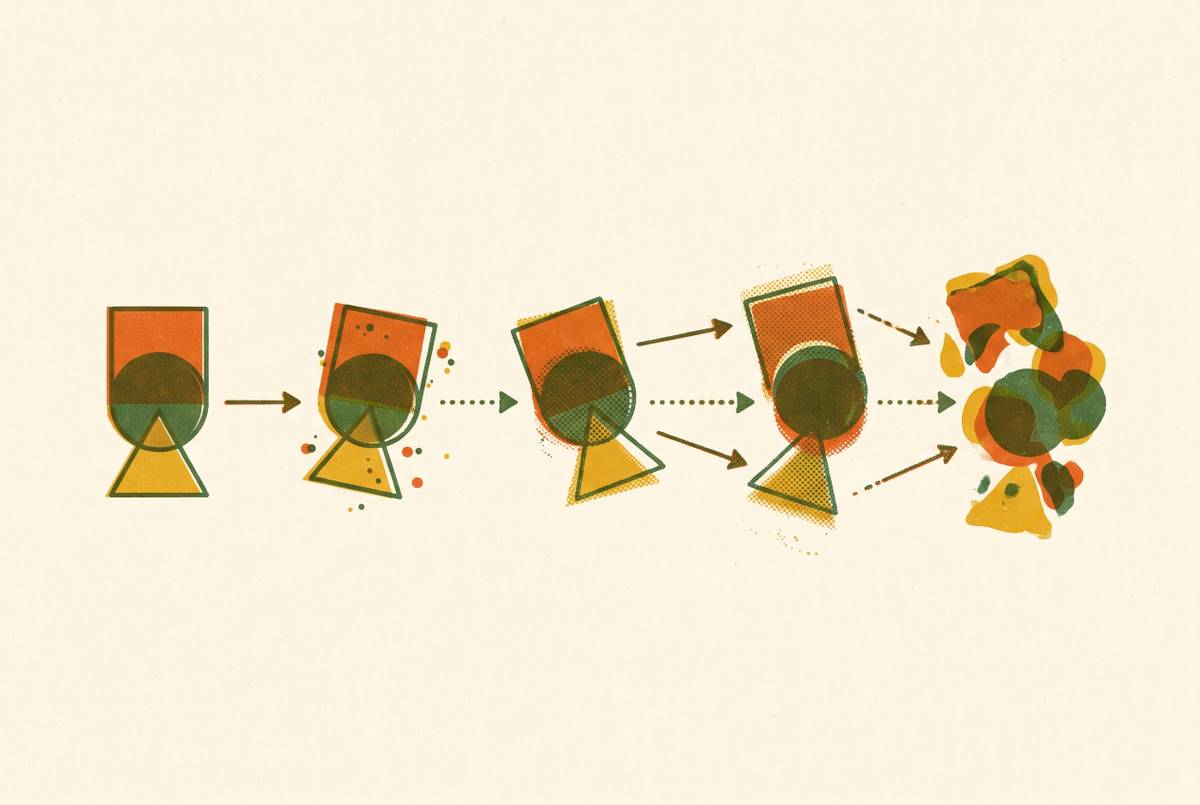
That system often begins with a workable single-agent routine. Someone pastes hex codes, voice rules, and positioning into a prompt, then corrects whatever comes back slightly wrong. As more people and agents join, however, each prompt becomes another independent interpretation of the guidelines. Small deviations accumulate across typography, color, and tone before the overall drift becomes obvious.
The harm goes beyond how the work looks because agents can build on one another’s errors. A wrong positioning claim can move from sales to support to marketing, gaining apparent credibility through repetition. More careful prompting cannot reliably repair that architecture. Human-readable guides depend on interpretation, and instructions written for designers do not translate directly into dependable rules for language or diffusion models.
What brand context actually needs to look like for a machine to use it reliably
A machine-readable brand specification uses structured fields wherever there is an exact answer, in place of prose that needs to be interpreted. A traditional brand book combines narrative, visual examples, and directions that a designer evaluates through judgment. An agent needs queryable values and rules instead. “Warm and confident” may describe a voice, but it does not specify approved vocabulary, banned phrases, or a reading-level target.
Design tokens provide that precision for visual identity by expressing color values, typography scales, and spacing units in JSON or YAML. Voice and tone schemas do the same for language. Compliance flags define machine-checkable rules for regulated claims and required disclosures, while asset metadata records usage rights and channel approvals. API-accessible endpoints make these fields available to agents without asking a person to extract them from a document.
Visual generation also needs reference images and fine-tuned examples, because hex codes and clear-space rules alone do not reliably guide a diffusion model. Structure makes clear which facts are spelled out and where examples are still needed.
Aravi AI recommends starting with the facts agents repeatedly get wrong, agreeing on one answer for each, connecting tools where facts change quickly, and deleting competing copies. It describes a first version as achievable in a single workday because the initial work is curation. The profile is then a set of fields that compatible tools can query before they generate work, instead of another slide deck that a person has to translate.
What MCP is and why it became the standard way agents pull context from outside systems
Model Context Protocol is an open standard for connecting AI applications to external data and tools. It is like USB-C for AI. Instead of building custom wiring for every application and data source pairing, a source exposes one MCP server that compatible applications can connect to. This reduces the number of connections needed from N×M to roughly N+M.
Anthropic introduced MCP in November 2024. In late 2025, the Agentic AI Foundation under the Linux Foundation took over governance, so no single company controls where the protocol goes. OpenAI, Google, and Microsoft support it. That breadth makes MCP a shared industry interface rather than a proprietary route into one vendor’s tools.
The architecture has three roles, which are the host, client, and server. The host is the AI application, such as Claude, ChatGPT, or a custom agent, while the client manages its session with the server. The server exposes the organization’s data, tools, and rules. For a brand team, that is the point where its structured identity becomes accessible.
MCP supports actions as well as retrieval. RAG helps agents answer questions about a brand, while MCP lets agents do things with and for that brand. Explaining a return policy illustrates retrieval, while processing a return illustrates action. Because MCP is model-agnostic, compatible tools can use the same shared brand context without anyone having to rebuild it for each model.
How do you keep every AI agent on brand without constant manual prompting?
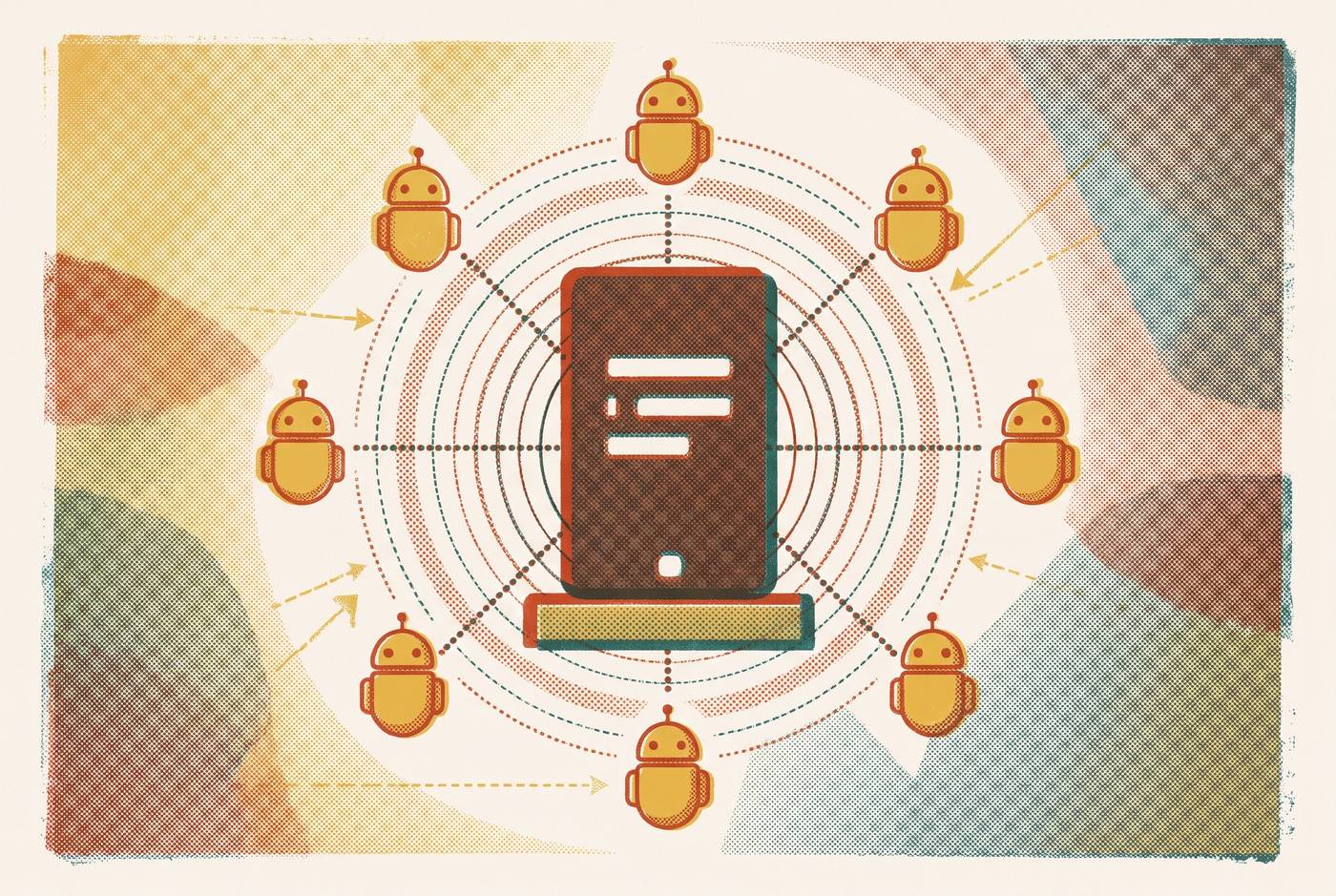
An assistant connected to Slack does not need a fresh explanation of the workspace structure every time it summarizes a channel. The connection supplies the relevant context. A brand’s identity can follow the same pattern when its structured profile sits behind an MCP server and connected agents are configured to consult it before generating.
For a copywriting agent, that means retrieving the tone-of-voice schema and banned phrases rather than relying on what someone included in today’s prompt. An image agent queries approved color values, reference imagery, and usage rules before creating an asset. A campaign-planning agent works from current positioning, approved claims, and compliance flags rather than a brand deck attached to an old conversation. These agents need different fields, but they draw them from the same authority.
The connection also changes how work can be reviewed. An autonomous marketing agent can generate an output, check it against the same source, and flag deviations. Creation and review no longer depend on separate interpretations of what the brand requires. Teams can also switch between connected tools without having to upload and explain the identity again.
Versioning keeps this setup working as the brand changes. When an approved color, voice rule, or positioning statement changes, the server exposes the updated version for connected agents to use. The team no longer has to distribute revised prompt templates manually across the fleet.
What this architecture looks like in a real brand platform and at multi-brand scale
Frontify provides a concrete implementation of this architecture through its MCP server, in beta as of July 2026. Frontify’s founder and CEO Roger Dudler describes assistants in Claude or ChatGPT querying the platform directly for tone-of-voice guidelines, colors, logos, and fonts. The assistant retrieves context from the brand platform. It does not depend solely on the material a user supplies in the conversation.
Frontify also lets teams manage multiple brands or sub-brands in one platform, so keeping their context apart matters in day-to-day work as well as in the design. Frontify’s Bosch customer story describes how a small team handles governance and access for many users around the world. Its Telefónica customer story describes sub-brand management across 16 global markets. These examples establish the scale of brand management the platform supports.
Aprimo’s May 2026 release introduced an MCP server connecting external AI tools to permissioned content and expanded its agentic capabilities with Librarian Agents that customize ingestion and enrich complex content. Both platforms let outside tools use the context they manage, though their documentation says they can do different things.
Frontify’s beta allows one active tool pack for the whole account, so switching packs affects every user at once. Frontify’s documentation also warns that agents “may occasionally misinterpret instructions,” potentially causing unintended changes. Shared access therefore creates a need for shared controls, especially when one platform serves many users or brands.
Why governance — not the protocol — is the harder problem to solve
The strongest objection is that brand consistency is a governance problem. MCP does not decide who owns the source, who approves edits, or how twelve regional teams settle on one version of the brand voice. A single endpoint is only better than scattered prompts if its contents are agreed upon and maintained. Connection alone cannot establish authority.
Without governance, teams can create context files that disagree and share whichever was updated last. Every agent may then work from the same wrong version. Centralization makes distribution faster, but it does not make the underlying decision correct.
That requires one accountable person or function to own the canonical context. Changes need approval before they propagate because one edit can affect every connected agent. An audit trail needs to establish which version an agent used, when it used it, and what it produced. Access controls must also keep one client’s context from entering another client’s workflow.
MCP provides a common access mechanism, while these organizational controls make it dependable. The advantage over per-prompt management is that the shared source can be versioned, reviewed, and rolled back. An isolated prompt typed into a conversation does not provide that fleet-wide control point. The appropriate operational model is therefore similar to shared code infrastructure, with reviewed changes and a recoverable history.
What a team actually does to move from per-prompt brand management to shared brand infrastructure
For a team making this transition, the sequence starts with an inventory of what active agents already receive. Gathering prompt snippets, attached PDFs, Notion pages, and shared documents shows where instructions disagree and where context is missing. The conflicts need names before they can be resolved. This inventory is also the gap analysis for the canonical source.
The next step is to assemble that source from agreed answers. It needs structured voice rules, visual identity with reference examples, positioning, compliance flags, and approved and banned vocabulary. A first version can be assembled in a single workday, but that is a curation milestone rather than proof that fleet-wide governance is complete. The owner and approval process establish which answers become authoritative.
Once that context is available through the shared connection, the server should return the subset appropriate to each task. A campaign image and a support email need different brand briefs. Returning relevant fields rather than a 50-field dump gives the agent the context suited to its work. Review should then check the finished work against the same source used to generate it and include evidence for each check.
Updates should be reviewed, approved, logged, and propagated as new versions with a rollback path. That process lets connected agents pick up approved changes while keeping the history needed to check earlier work. For multi-brand teams and agencies, each brand needs its own profile and scoped access. An agent working on Brand A should never use Brand B’s context.
Why the teams that build this infrastructure now will operate differently from the ones that don't
The operational advantage is the removal of repeated brand briefing as the fleet expands. With per-prompt management, every new agent gets another copy of the guidelines, every new team member reads them in another way, and every tool change calls for another round of fixes. The maintenance burden grows with the number of places where brand knowledge has been copied.
Shared infrastructure changes where that effort goes. The team still has to curate the identity, approve changes, control access, and review output. Those responsibilities do not disappear. But when a compatible agent is added, no one has to recreate the brand’s instructions from memory or send an approved change through every prompt template.
Gartner projects that 33% of enterprise software will include agentic AI by 2028. As agents become part of more software, the cost of maintaining separate brand instructions increases precisely when more work is being delegated to them. A model-agnostic interface also lets the shared profile outlast an individual AI tool.
The practical test is straightforward. If a new AI tool joined the workflow today, would it know the brand automatically, or would someone need to brief it from scratch? The answer reveals whether the team has built brand infrastructure or still depends on tribal knowledge.