The Emerging Stack for Brand Context in Agentic Workflows and Where Bloom Sits in It
Bloom provides the shared brand layer agents need to stay consistent across production workflows.
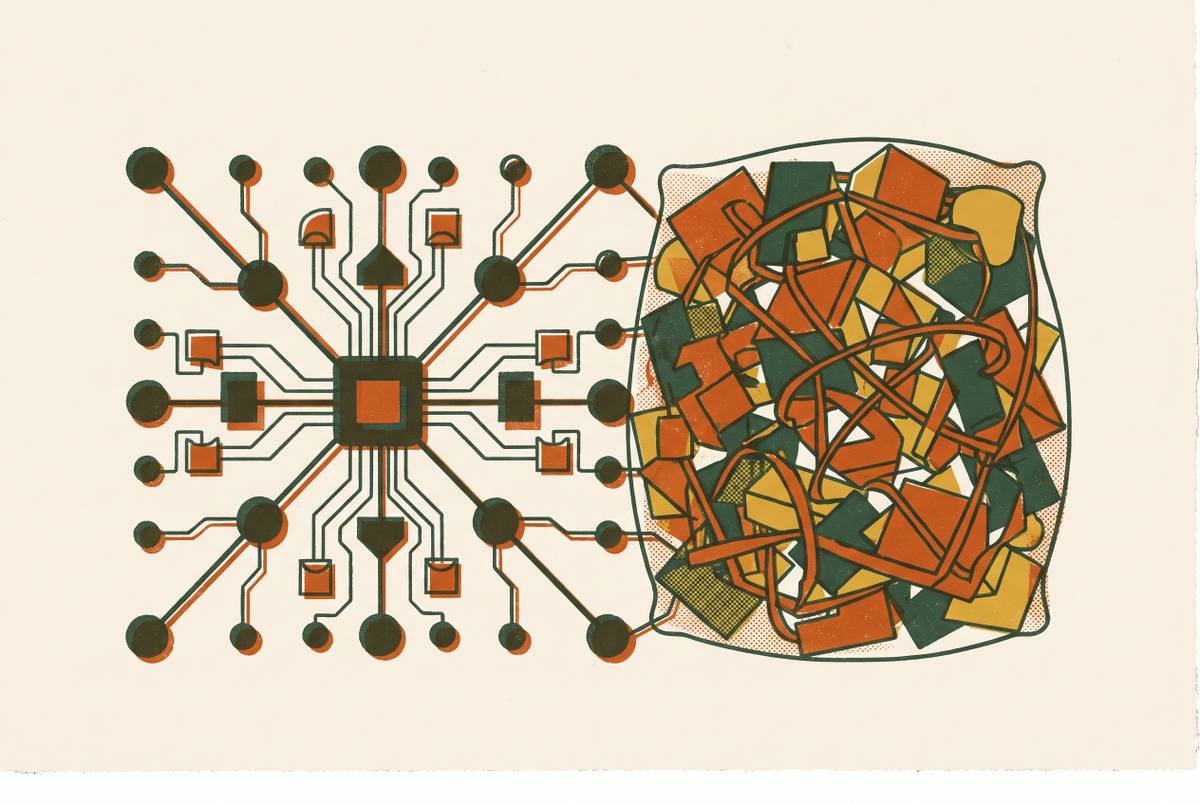
The brand layer for agents is a shared, machine-readable source of brand identity that agents draw from by default and finished work is reviewed against. It belongs between the agent and the assets it produces. Bloom sits in this layer, providing brand context through MCP and REST API connections, versioned updates, and evidence-backed review.
Why agentic marketing creates a brand consistency problem that prompts alone cannot solve
On Monday morning, an agentic marketing workflow can be planning campaigns, making creative, and getting it ready to send out while another task is still joining the queue. Work no longer waits for a human coordinator to read each brief and pass instructions from one tool to another. The agent receives a goal and plans the execution. It decides channels, formats, tone, and cadence rather than following a rigid IF/THEN sequence that someone wrote in advance.
That autonomy changes where brand decisions are made. When instructions leave a gap, the agent fills it with the most statistically probable answer for the category, which is also the most generic answer. Competitors using similar models and briefs can converge on similar output. Shared brand infrastructure does not cause that homogenization. The absence of specific, proprietary context does.
A more detailed prompt can improve one task, but it cannot keep separate workflows synchronized. Briefs sit in one document, visuals in a design app, drafts in another tool, and scheduling elsewhere. Each handoff creates another opening for stale or incomplete information, especially when publishing is separated from briefing. As workflows move from pilots into production, consistency becomes a problem of how context reaches each decision.
What the agentic marketing stack actually looks like, and where brand context is missing from it
An agentic production pipeline has five recognizable layers, namely intake, research, generation, QA, and distribution. At intake, an agent extracts requirements, creates a project plan, and assigns work to specialist agents. Brand guidance commonly enters as a PDF attachment or pasted paragraph rather than a live, queryable source. The brief supplies context, but not shared state. Its contents do not automatically become the rules that every later agent uses.
Research agents then find trends, competitive intelligence, and past performance before the creative work starts. Brand constraints rarely reach this layer, so the inputs to the strategy may leave out rules that the finished work is expected to follow. Generation agents produce concepts across formats simultaneously, referring to loaded guidelines only when those guidelines have been explicitly connected. Access cannot be taken for granted. An instruction present at intake may be absent where a creative decision is made.
QA agents can check brand rules, resolution specifications, and platform requirements before human review. Their reach depends on what they have been given. If brand rules were never encoded, the check cannot reliably enforce them. Distribution and monitoring agents operate farther downstream, where inconsistency has already shipped or is one approval away from shipping.
The missing slot is therefore not another production stage after generation. It is a shared context layer that the production stages can query as they work. Positioned between agent decisions and resulting assets, it gives planning, generation, checking, and publishing a common reference. Without that connection, brand guidance remains an ad hoc input at whichever stage a human remembers to include it.
How MCP makes a shared brand context layer technically possible
Webflow’s MCP server provides a concrete model for this connection. Each site can set out Agent Instructions for its design system, voice and tone, CMS conventions, and policies. The server supplies those instructions to connected agents automatically. A dedicated brand context server can do the same thing across more than one site.
Model Context Protocol, or MCP, is an open standard that gives agents a common interface to tools, data, and business systems. It is built on JSON-RPC 2.0. MCP’s documentation describes it as “a USB-C port for AI applications,” emphasizing a standardized connection. Before that common protocol, anyone connecting an agent to several internal systems had to keep up a separate integration for each one. MCP gives compliant agents a standardized way to query one brand source.
The protocol also has governance beyond a single vendor. Anthropic’s December 2025 announcement placed MCP under the Agentic AI Foundation, a directed fund of the Linux Foundation co-founded by Anthropic, Block, and OpenAI. The announcement named support from Google, Microsoft, Amazon Web Services, Cloudflare, and Bloomberg. That governance separates the integration standard from any individual brand-context product.
The connection still has a practical constraint. Connected tools describe their schemas to the model, so attaching many tools can consume substantial context before a user sends a message. This favors a lean, dedicated brand context server over duplicating brand rules inside every tool’s schema. MCP also serves a different purpose from A2A, which governs coordination and delegation between agents. A coordinator can delegate over A2A while each specialist queries the same brand context over MCP.
What brand identity must look like for machines to consume it reliably
A connection does not make a brand guide machine-readable. PDFs, slide decks, and marketing copy are designed for people who can interpret examples, reconcile exceptions, and infer unstated rules. Agents need those rules expressed as data. Brand name, description, logo, pricing, tone rules, and visual standards therefore need code-level representations, including structured data and machine-readable schemas, rather than remaining buried in prose or design files.
The brand.json convention gives this shift a concrete form. Instead of treating the brand as a document to attach, it treats brand identity as structured information that software can consume. The filename alone does not provide that structure. The useful distinction is whether brand properties and constraints are explicitly represented or still require an agent to infer them from descriptive copy. A machine-readable brand source closes that interpretive gap.
For visual identity, design tokens make the principle operational. Colors, spacing, and typography become defined values that future assets draw from, so a token update propagates rather than requiring manual correction across templates. Version-controlled templates bring the same approach to the formats used to make the work. Teams can see who changed what, return to an earlier state, and maintain separate template sets for sub-brands or campaigns.
Visual structure is only part of the source. Voice guidelines, approved claims, legal exclusions, audience definitions, and CMS conventions must also be queryable. An asset can use the correct color and still make an unapproved claim or address the wrong audience. The common source must express the decisions that define the brand.
Why brand drift accelerates when multiple agents share no common context
Without shared context, each agent maintains an isolated copy of the brand rules it has received. Those copies diverge when one becomes stale or incomplete. Higher output volume magnifies the divergence. Agentic workflows can move monthly creative production from tens of assets to hundreds without adding headcount, turning inconsistency that was manageable at low volume into a systematic problem.
Jellyfish replaced portions of manual media buying with AI agents and cut campaign launch times significantly. Brand decisions that previously passed through a human can now be made autonomously at speed. When work moves faster, people have less time to check in with each other and make up for the lack of shared rules.
McKinsey described a consumer brand that classified marketing tasks into six agent archetypes, including content generator, knowledge, localization, analyzer, planner, and operator. Those archetypes were reused across workflows. Their shared context therefore needed to remain consistent across both roles and projects.
Havas announced the upcoming launch of AVA at CES 2026 as a global LLM portal providing secure, centralized access to advanced AI models. Centralized model access shows that governing distributed AI use is a concern for holding companies as well as small teams.
Gartner estimates that only a small fraction of vendors claiming agentic capability offer genuine agentic systems. Rebadged assistants can obscure the architectural gap because manual prompting still supplies coordination. That reliance on manual prompting becomes visible when agents start making more decisions on their own.
How to keep AI agents on brand without constant manual prompting, including the review step
A governed brand context layer is a queryable, versioned source that agents draw from by default. Its structured content covers voice rules, approved claims, visual tokens, logo specifications, tone constraints, legal exclusions, and audience definitions. Default access changes the operating model by making brand guidance an automatic part of the workflow.
Permission policies govern what each connected agent can do. Read and write access, spend caps for each connector, launch settings that make work draft-by-default, and required audit logs set limits before production starts. The human-AI handoff must also be documented, covering who commissions work, who reviews it, who approves it, and what happens when output is weak or off-brand. Otherwise, responsibility remains implicit while execution becomes autonomous.
Approval can then reflect the risk of the asset. Automated checks test the rules that have been encoded, such as those for color, token use, file specifications, and accessibility. Standard assets go through peer review, flagship assets go through senior review, and regulated content needs stakeholder approval. Human judgment has a distinct role here. Designers can judge the quality of the creative work instead of spending their review time checking for the wrong shade of blue.
Bloom occupies this context-and-review layer. Claude, ChatGPT, Claude Code, Cursor, Codex, and other MCP-compatible agents can connect directly to its brand context. A REST API makes the same context available to internal tools, custom workflows, and products. Teams managing several brands can treat each as a first-class workflow.
When brand guidance changes, connected agents and products work from the new version. Bloom also reviews finished work against the brand with evidence for each check, creating an auditable record of which rules were applied.
Forrester warns that agencies risk mistaking efficiency for effectiveness as a focus on productivity and cost undermines creativity and long-term brand growth. Review closes the loop by examining finished output against the source and preserving room for the judgments that rules cannot encode. It is part of the operating architecture.
How to assess whether your current setup has a brand context layer or just brand context fragments
Fragments are brand instructions distributed across prompts, PDFs, and individual tool settings. A layer connects agents and products to a common source and makes its use testable. The architectural distinction means that a thorough brand guide can still function as a fragment if every agent receives a separate copy.
The first diagnostic question concerns the single source. Does every agent and product draw from the same place, or are brand rules kept in several places that are updated separately? The second concerns machine-readable structure. Are voice rules, visual tokens, approved claims, and exclusions queryable as structured information, or must each agent interpret a prose attachment?
Third, when the brand changes, does the change reach every connected agent on its own, or does someone have to edit prompts and upload new files to replace the old ones in each tool? The fourth tests auditable review. Does each generated asset have a record of which brand rules were applied and whether it passed, or does review become subjective or disappear under volume pressure?
For teams beginning that transition, the 90-day practitioner playbook starts with the queryable source, covering voice, approved claims, and exclusions. Agent permission policies follow, including read and write access, spend caps, draft-by-default settings, and audit logs. Agents then connect over MCP or API so they draw from the source by default. This sequence establishes the governing context before expanding access to it.
Gartner projects that 60% of brands will use agentic AI to facilitate streamlined one-to-one interactions by 2028, up from effectively zero in 2024. As more workflows depend on autonomous decisions, retrofitting governance means changing systems already in production. That cost is the reason to design the brand context layer before scaling.